AI Titans Clash at Dreamforce 2026: Jensen Huang and Dario Amodei Debate the Future of Intelligent Systems

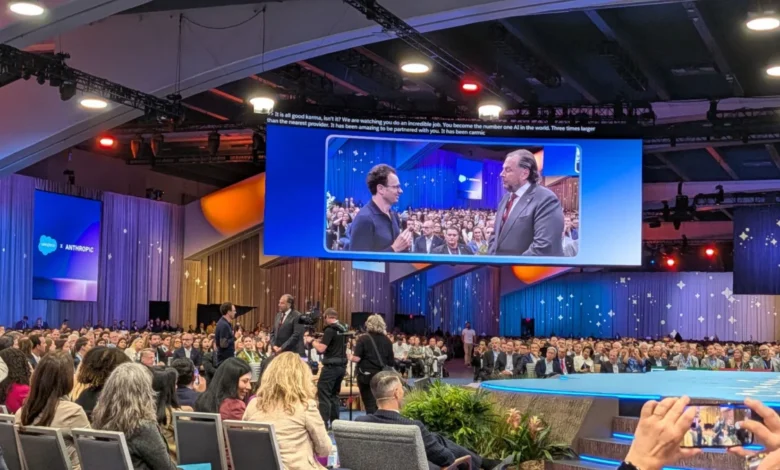
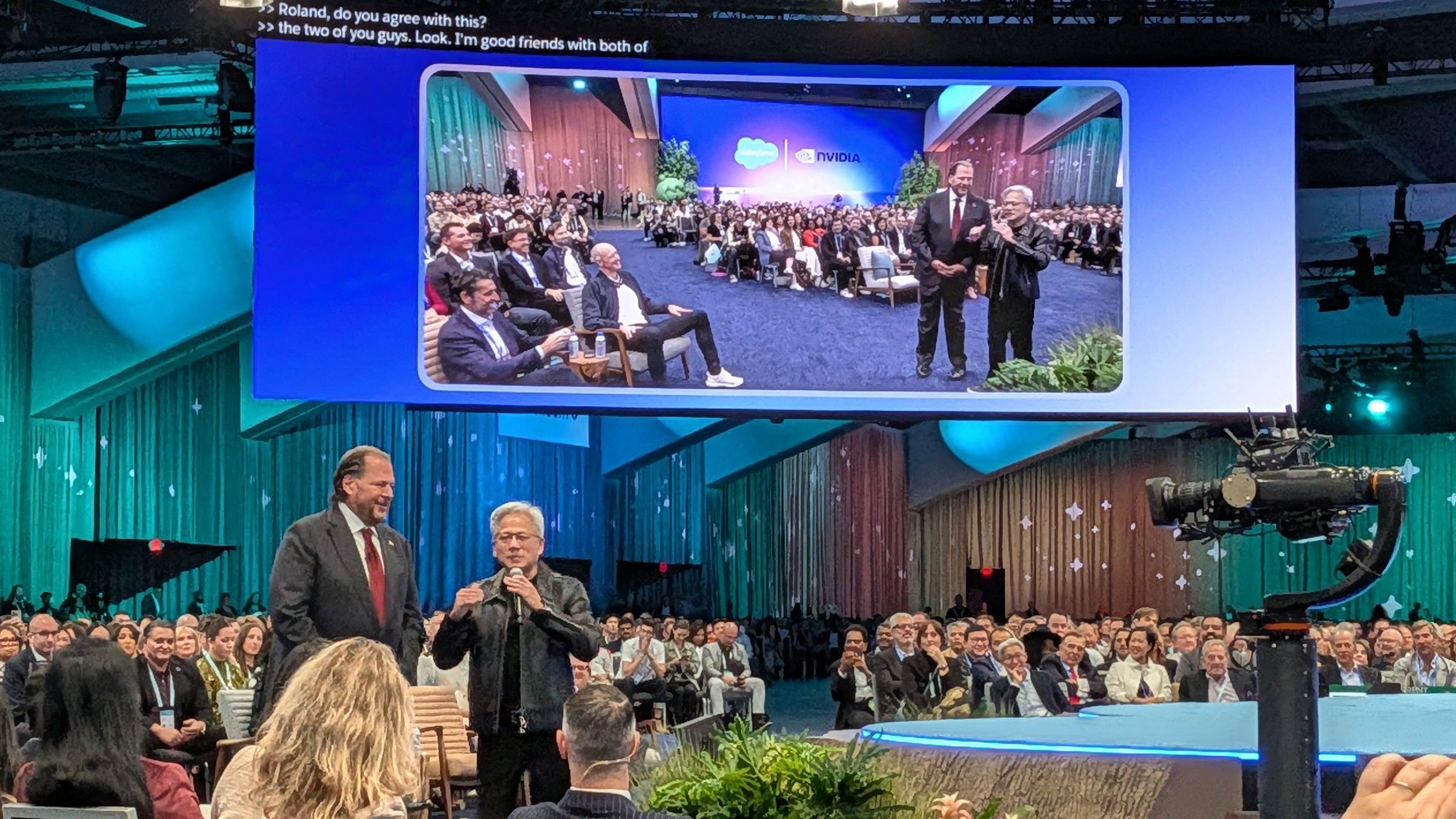
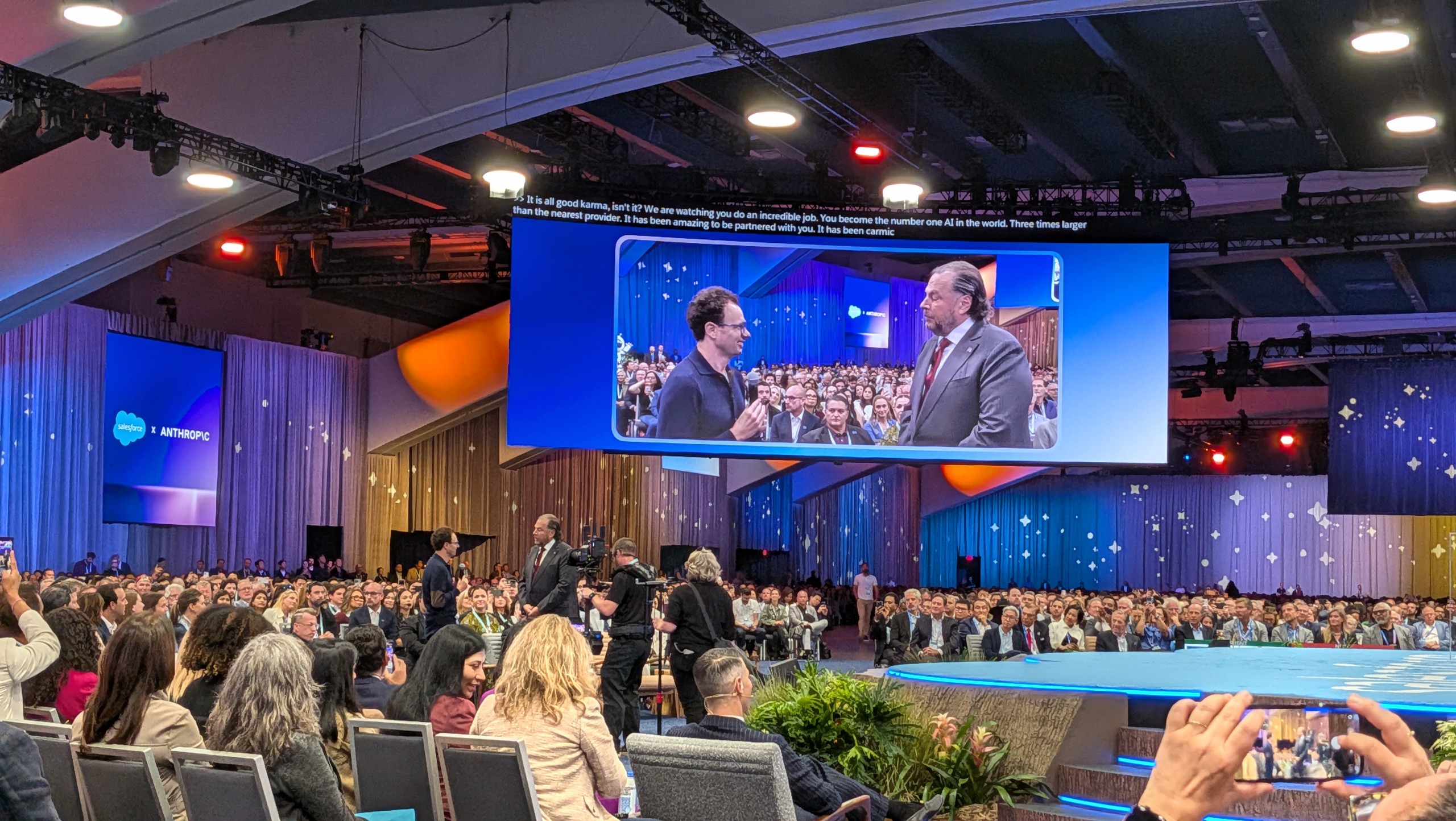
The opening keynote of Dreamforce 2026 in San Francisco served as a pivotal stage for two of the most influential figures in artificial intelligence, Nvidia CEO Jensen Huang and Anthropic CEO Dario Amodei, to present divergent philosophies on the trajectory, safety, and economic integration of generative AI. Moderated by Salesforce CEO Marc Benioff, the discussion highlighted a growing divide in how the industry’s primary architects perceive the balance between rapid innovation and responsible deployment. As Salesforce continues to double down on its integration of Anthropic’s Claude models through the newly unveiled Claudeforce platform, the dialogue underscored the complex regulatory and operational landscape currently facing global enterprises.
The Context of Dreamforce 2026 and the AI Maturity Curve
Dreamforce, Salesforce’s annual flagship event, has evolved from a customer relationship management gathering into a central clearinghouse for enterprise AI strategy. The 2026 edition arrived at a moment of profound industry fatigue and transition, as companies move past the initial "hype cycle" and into the reality of operationalizing AI agents.
The event’s atmosphere was underscored by the recent release of "Claudeforce," a collaborative effort between Anthropic and Salesforce designed to bridge the gap between high-level language models and backend enterprise workflows. This partnership is representative of a wider market trend where foundational model providers (like Anthropic) are increasingly tethered to established SaaS giants to gain the distribution channels necessary to reach enterprise customers.
Chronology of the Debate: Divergent Views on Development
The session began with an inquiry from Benioff regarding the state of the AI market. Dario Amodei offered a measured, systemic perspective, drawing a parallel to the automotive industry. Amodei suggested that the maturation of AI should mirror the evolution of vehicle safety, where manufacturers learn from cross-industry data to standardize security protocols. "I think that’s the way to lead the industry forward, to set an example, to say that everyone can always be better," Amodei noted. His focus remained heavily on international collaboration and the necessity of establishing a global baseline for safety standards, acknowledging that his company had severely underestimated the velocity at which AI would integrate into the economic fabric of daily life.
Conversely, Jensen Huang’s approach was defined by his hallmark optimism regarding the "new industrial revolution." While Huang did not dispute the importance of safety, he rejected the premise that it must come at the expense of speed. His philosophy positions safety as an engineering challenge rather than a moral or regulatory obstacle. For Huang, the directive to industry stakeholders is clear: move as fast as possible, but incorporate "pause points" when the technical limits of a model threaten to exceed the guardrails of the system.
Supporting Data and Industry Projections
The urgency expressed by both CEOs reflects broader market pressures. According to recent industry analysis, global spending on generative AI systems is expected to reach nearly $300 billion by 2027, with infrastructure providers like Nvidia capturing the lion’s share of capital expenditure.
However, the "diffusion" problem noted by Amodei remains a significant hurdle. During the keynote, Amodei estimated that even if current AI development were to be frozen, the global economy is currently utilizing less than 10% of the potential value inherent in existing models. This suggests that the primary barrier to AI adoption is no longer the capability of the models themselves, but the ability of businesses to integrate these tools into existing workflows—a process known as the "last mile" of AI deployment.
Huang’s data-driven outlook focused on the necessity of "Agentforce," a term coined to describe the move toward autonomous agents that perform complex tasks without constant human intervention. He warned that the risk of stagnation—being "left behind"—outweighs the risks of early, slightly flawed deployment, provided that companies maintain a commitment to iterative improvement.
Official Responses and Strategic Implications
The interplay between these two leaders reveals the "trilemma" facing AI governance: how to maintain speed, ensure safety, and ensure widespread economic benefit simultaneously.
Anthropic’s strategy, evidenced by their collaboration with Salesforce, leans toward a controlled, enterprise-ready environment. By embedding Claude within the Salesforce ecosystem, Anthropic aims to reduce the "black box" nature of AI, making it more predictable for high-stakes business environments.
Nvidia’s strategy, however, remains infrastructure-agnostic and hyper-accelerated. By providing the hardware and software layers—the "picks and shovels" of the AI gold rush—Huang is incentivized to see the rapid adoption of AI across every sector. His assertion that "safety is an engineering problem" serves as a direct challenge to lawmakers and ethicists who have advocated for more restrictive, top-down regulatory frameworks. By framing the issue as an engineering hurdle, Huang suggests that the solution lies in better chips, better software architecture, and more robust testing protocols rather than legislative bottlenecks.
The Broader Impact: Navigating the "SaaSpocalypse"
The term "SaaSpocalypse," referenced by Benioff during the event, describes the fear that traditional SaaS (Software as a Service) business models will be cannibalized by AI agents that perform the work of entire software suites. The debate at Dreamforce suggests that the industry is at a crossroads regarding how this transition will be managed.
The implications for the broader tech sector are substantial. If Amodei’s view prevails, we should expect a period of intense regulatory scrutiny and global standard-setting, which may slow the pace of development but potentially increase the longevity and stability of the systems created. If Huang’s view holds, we are entering a period of hyper-competition, where the first to effectively scale agentic systems will define the landscape for the next decade.
Analysis: Engineering vs. Regulation
The fundamental tension between the two speakers is one of philosophy. Amodei views AI as a powerful force that requires a "safety-first" cultural shift—a recognition that we are creating systems that have economic impacts that exceed our ability to predict them. He is effectively calling for a period of "responsible diffusion."
Huang, however, represents the "techno-optimist" school of thought. His rhetoric emphasizes that the technology is a tool, and like any industrial tool, its safety is a function of its engineering. This perspective shifts the burden of responsibility away from the developer’s intent and onto the technical performance of the machine.
For corporate leaders and developers, the path forward is a hybrid of these two viewpoints. The immediate future of AI will likely involve:
- Accelerated Infrastructure Investment: Companies will continue to pour resources into the compute power necessitated by Huang’s vision.
- Standardized Safety Frameworks: As Amodei suggests, the industry will likely be forced to adopt common safety benchmarks to satisfy both international regulators and risk-averse enterprise clients.
- Agentic Integration: As seen with the push for "Agentforce," the next phase of enterprise software will be defined by autonomous agents that require less human input, increasing the pressure on businesses to ensure these systems are both efficient and secure.
Conclusion
The Dreamforce 2026 keynote did not result in a consensus, but it clarified the stakes for the next chapter of the AI revolution. Whether one subscribes to the cautious, standards-based approach championed by Anthropic or the high-speed, engineering-focused mantra of Nvidia, it is clear that the integration of AI into the global economy is no longer a speculative endeavor. It is a reality that businesses must navigate, with or without perfect clarity. As Huang noted, the "sky’s the limit," but as Amodei reminded the audience, the responsibility to manage that ascent rests on the shoulders of the innovators currently defining the frontier. For the thousands of attendees at Dreamforce, the takeaway was clear: the technology is ready, but the path to implementation remains a complex, high-stakes balancing act between ambition and control.